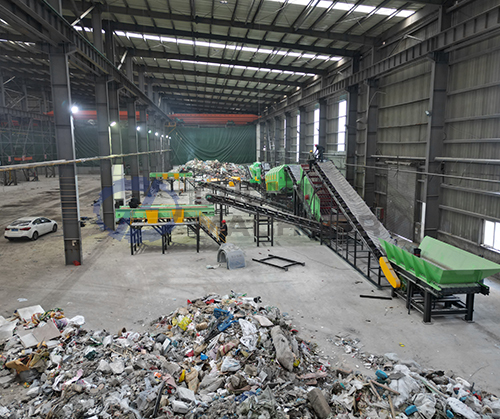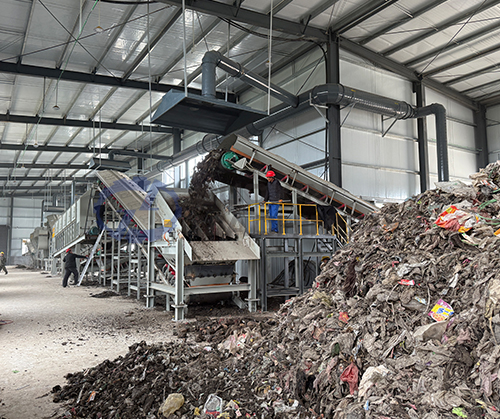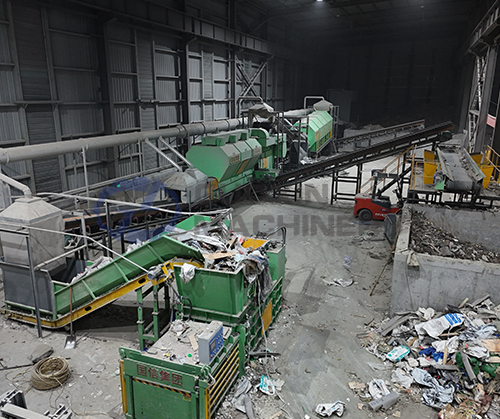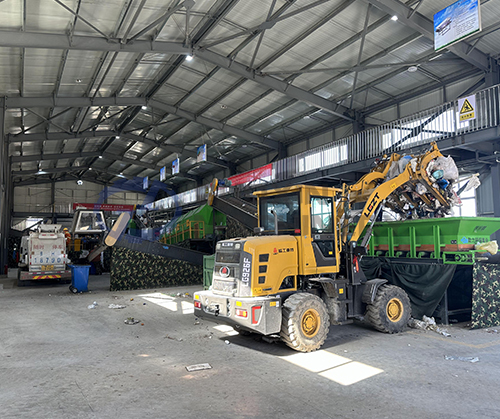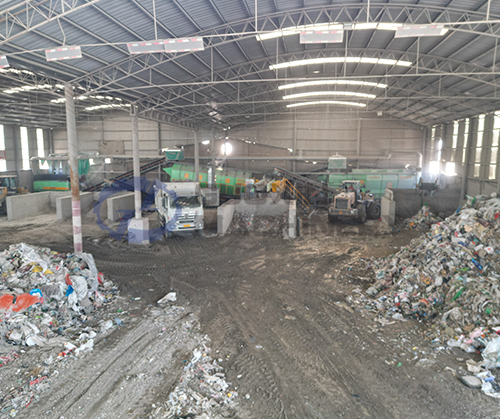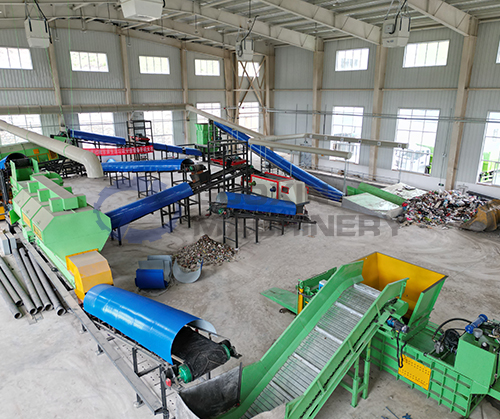
Handling material: kitchen waste, recyclables, hazardous waste, and other waste.
Handling capacity:100-1000 t / d
Project Scope:EPC turnkey solution including design, manufacturing, installation, and commissioning.
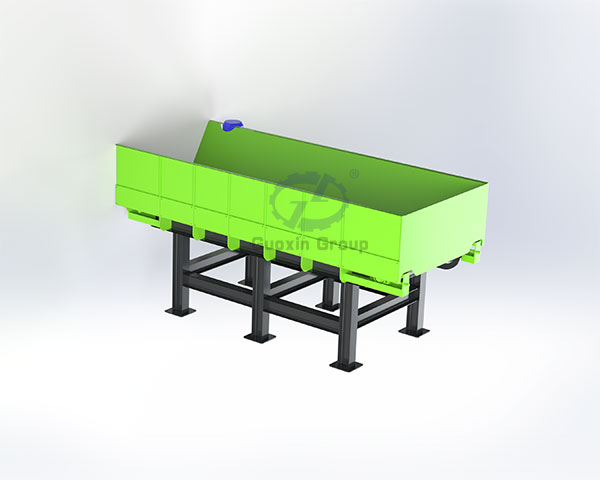
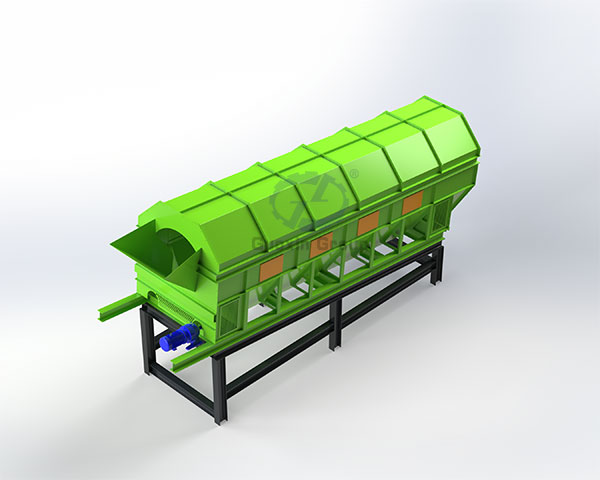
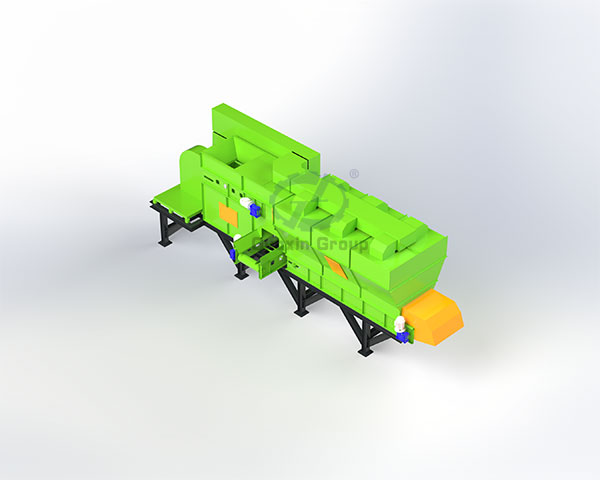
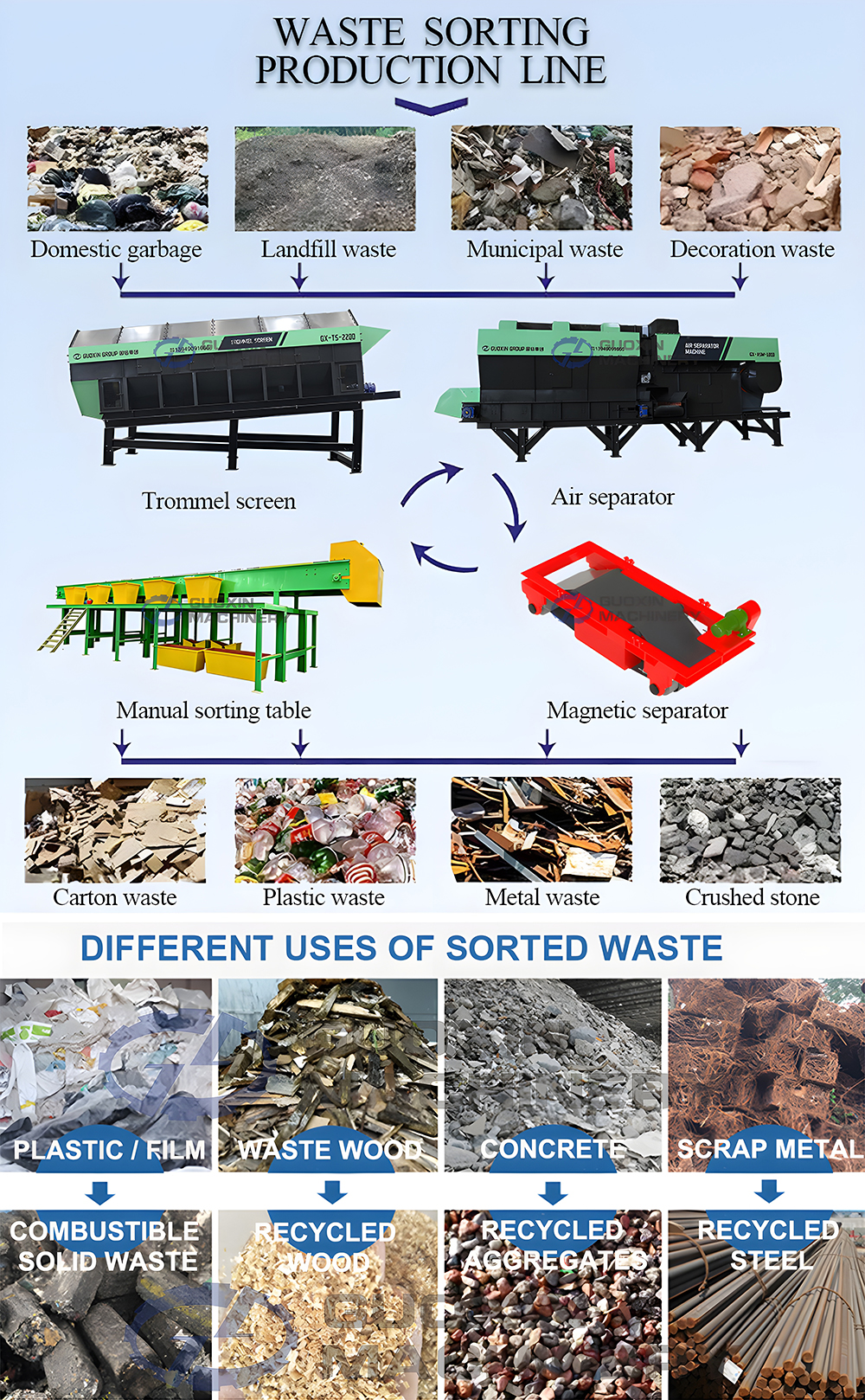
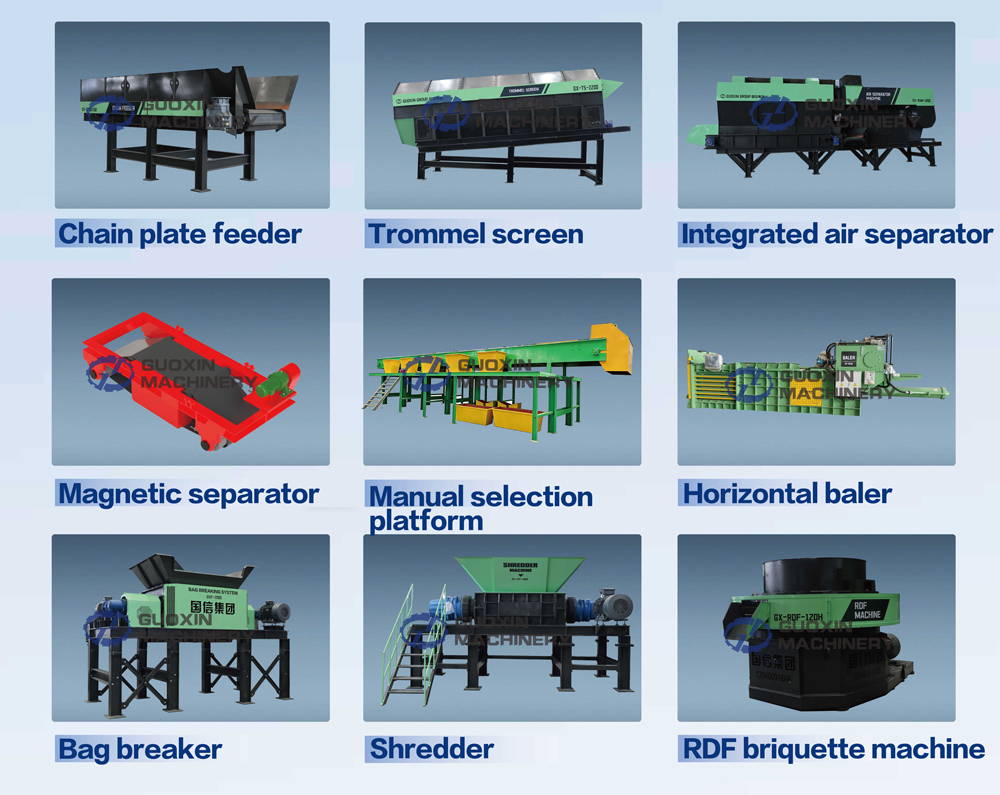
Equipment Configuration:Chain feeder, bag breaker, trommel screen, air separator, magnetic separator, shredder, RDF briquette machine, baler, etc.
End-product applications:Recyclable resources (plastics, metals, paper, glass, etc.), organic humus (for landscaping), RDF-derived fuel (for waste-to-energy incineration), harmless residue (for building materials and brick making).
Product Description
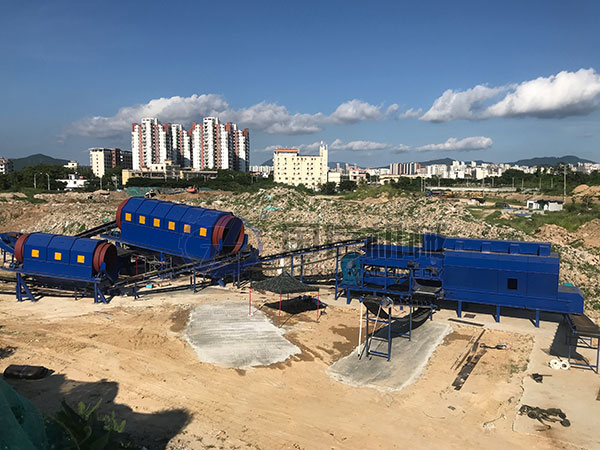
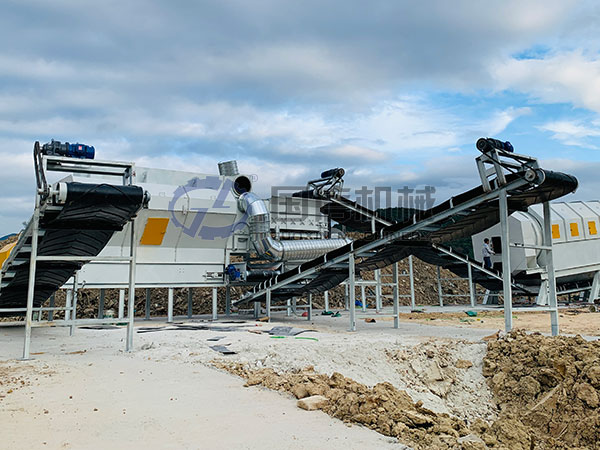
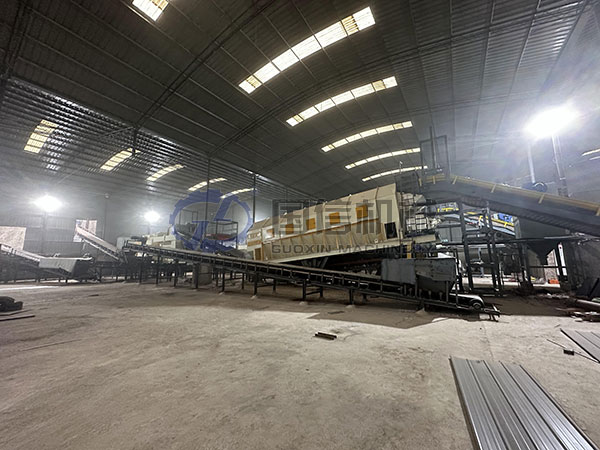
Municipal solid waste sorting equipment consists of feeding, bag breaking, screening, sorting, shredding, and forming systems. The entire production line is automated, saving manpower and improving efficiency. Through bag breaking, screening, and sorting processes, metals, plastics, paper, textiles, and recycled aggregates can be separated, achieving resource recycling and effectively solving the pollution problems caused by municipal solid waste.
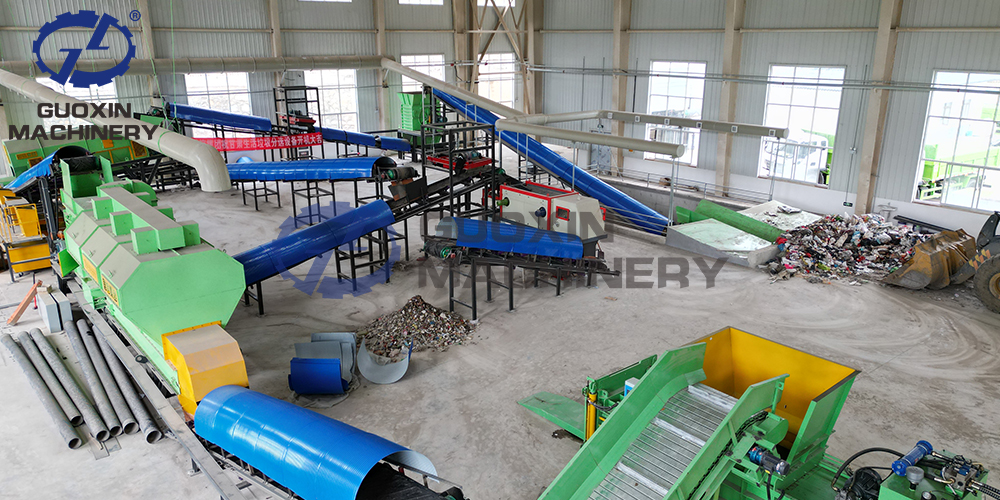
【Video display – click to play】
Features
Municipal solid waste can be recycled and reused after treatment: metals can be processed into recycled steel; plastics and paper can be recycled and reprocessed; combustibles such as textiles and plastics can be shredded and molded into RDF fuel rods for power generation; construction waste and other impurities can be crushed into recycled aggregates for the production of related environmentally friendly building materials.
Key features of municipal solid waste treatment:
1. High degree of automation, intelligent sorting, saving labor costs.
2. Complete process configuration, high sorting accuracy.
4. Strong processing capacity, stable operation.
5. Turning waste into treasure, reducing landfill and environmental pollution.
Process Flow
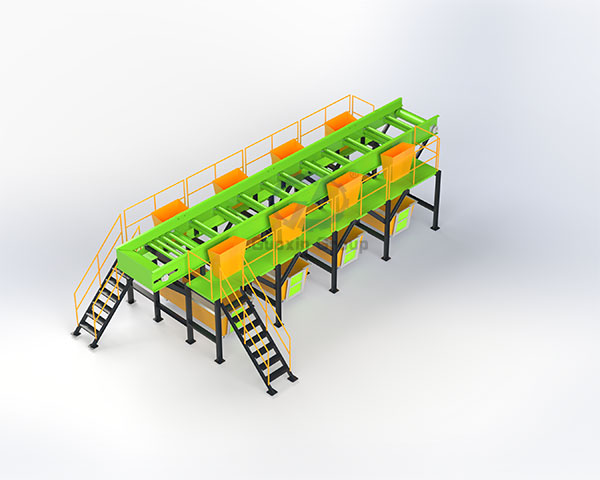
Whole Sorting Process-3D Model Demonstration
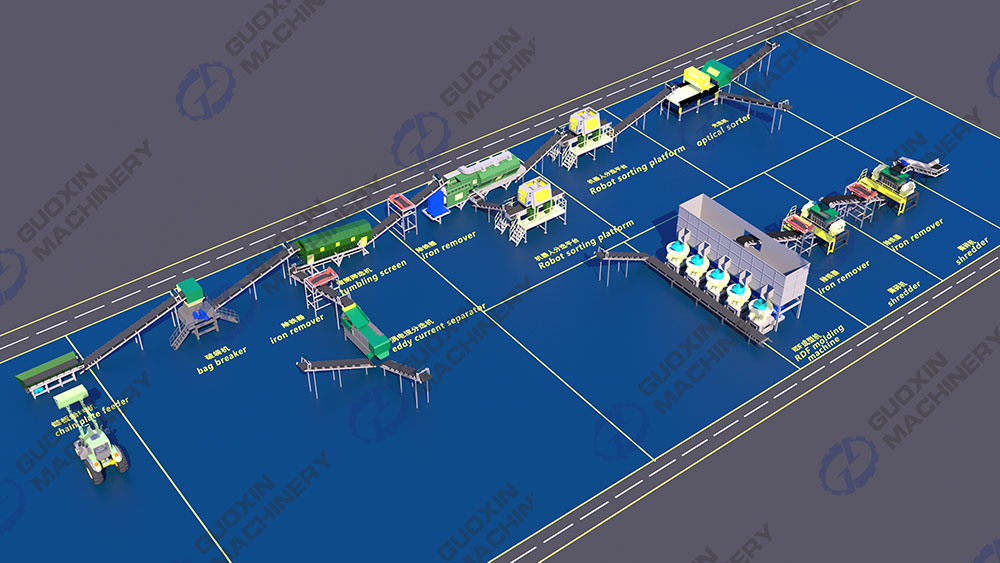
After mixed municipal solid waste enters the hopper, it is conveyed by a chain feeder and first enters a bag-breaking machine to remove the packaging bags and prevent them from affecting subsequent sorting. Then, the waste enters a drum screen (30/50mm aperture) to separate materials smaller than 30/50mm (fine material) and larger than 30/50mm.
Materials smaller than 30/50mm undergo magnetic separation to remove metallic impurities. The remaining fine material is stored for subsequent recycled aggregate processing. Materials larger than 30/50mm first enter an air separator to separate heavy and light materials. The light and heavy materials then enter a manual sorting station where large debris and non-recyclable hazardous materials are manually removed, separating them into light materials (plastics, textiles, paper) and heavy materials (bricks, ceramics, etc.).
Lightweight materials are sorted manually. Lightweight materials that cannot be used to produce RDF fuel rods are packaged into bales by a baler. Materials that can be used to make RDF fuel rods are magnetically separated to remove metals and then sent to a shredder for crushing. They are then processed into RDF fuel rods by an RDF forming machine. Heavyweight materials undergo simple inspection, are then crushed and screened into reusable recycled aggregates.
Parameter
The Household Waste management machines have different models, including GX-100, GX-200, GX-400. and their capacity ranges from 100 to 400T per day, which satisfies the different requirement of customers.
| Model | GX-100 | GX-200 | GX-300 | GX-500 | |
| Capacity | 100T/D | 200T/D | 300T/D | 500T/D | |
| Power | 101.4KW | 134.4KW | 164.7KW | 222KW | |
| Equipment Area | 1200㎡ | 1300㎡ | 1500㎡ | 1800㎡ | |
| Working time | 8-10 hours | 8-10 hours | 8-10 hours | 8-10 hours | |
| 1,Box Feeding machine/Chain feeder 2,Bag breaker 3,Trommel screen 4,Air separation machine 5,2 sets manual sorting table(1 set for light materials,1 set for heavy materials) 6,Hydraulic baling machine 7,RDF machines line |
|||||